
Tarantella sorrentina, Neapolitan tarantella, pizzica and tammurriata: the differences
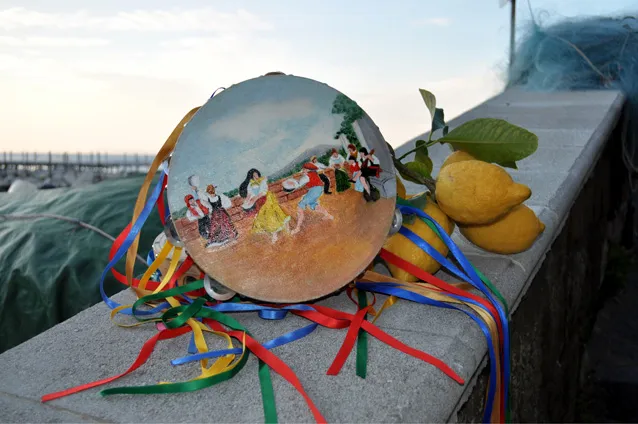
Travel around southern Italy and you'll hear almost any fast folk dance with tambourines and clapping called a "tarantella". In fact the name covers a whole family of different dances, each rooted in its own area. In this article we try to untangle four names that are often confused: the tarantella sorrentina, the Neapolitan tarantella, the pizzica and the tammurriata.
A word of caution first: these are folk traditions, handed down mainly by word of mouth and by example, and they vary from town to town and even from family to family. Scholars don't always agree on their origins either. What follows is a general guide, not a rigid classification.
A shared root: tarantism
The word tarantella recalls Taranto, the ancient Tarentum, and the phenomenon of tarantism found along the Ionian coast: according to tradition, people bitten by the taranta, a spider, were cured by dancing for hours to music. Alongside this explanation there are older, more evocative stories, such as the legend of the Sirens who bewitched Ulysses, or the theory of a link with the cult of Dionysus.
What we can say with more confidence is that in the eighteenth century, around Naples, the tarantella lost its ritual meaning and became a dance of celebration, of love and courtship, accompanied by violin, guitar, mandolin, tambourines and castanets. You can read more on our origins page.
Neapolitan tarantella and tarantella sorrentina
The Neapolitan tarantella is the festive couples' dance found in Naples, the one many visitors picture when they think of southern Italy. It is joyful and lively and lends itself to many interpretations, from village festivals to stage performances.
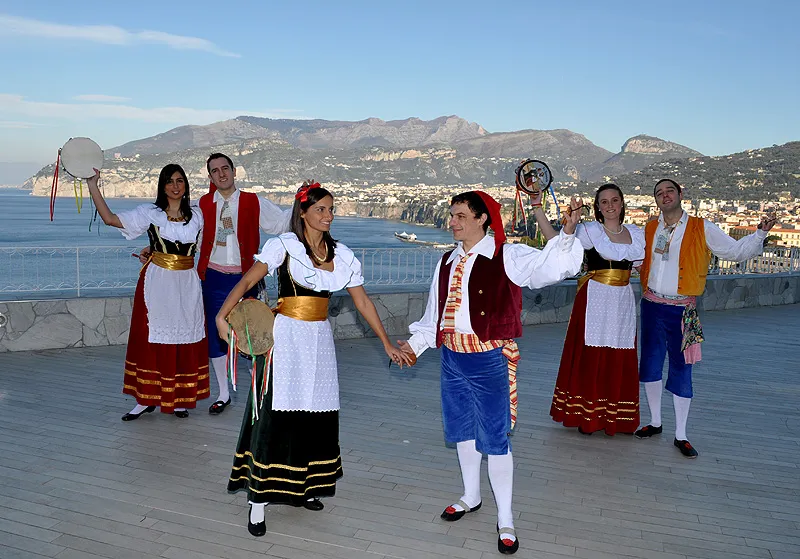
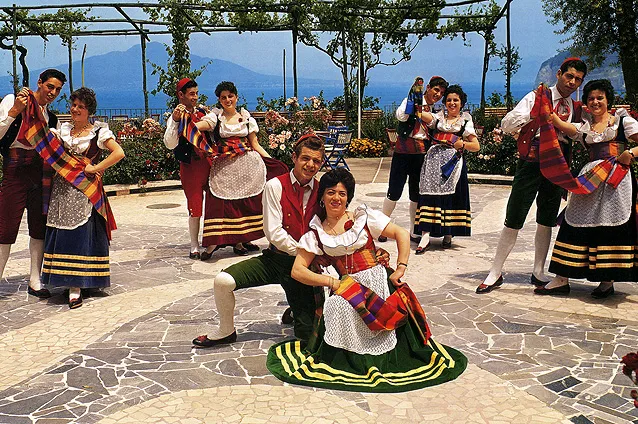
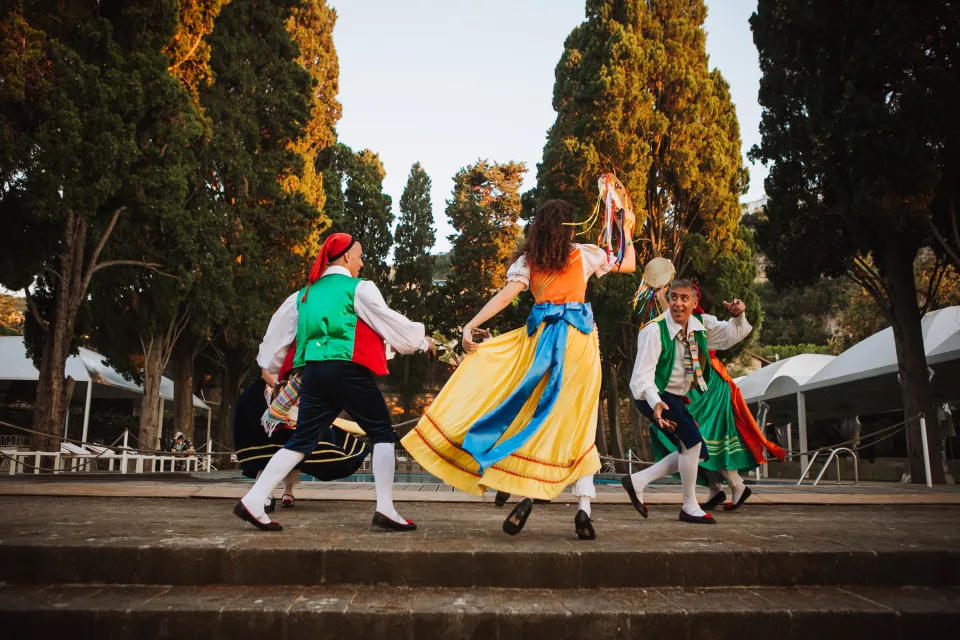
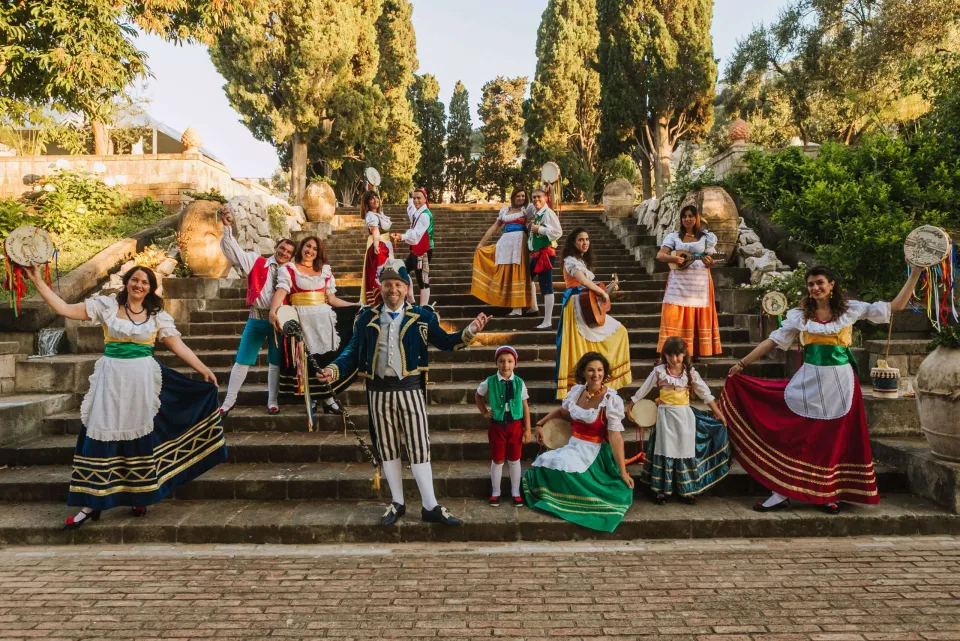
The tarantella sorrentina is the form that belongs to the Sorrento Peninsula: a couples' dance with set figures and a strong sense of theatre. It opens with the couples parading in and forming a circle, then moves through precise steps such as the saltelli (small hops), the traversè, heel and toe, the rondeau and the giro in vita (arm-in-arm turn). Each piece has its own name: Tarantella Tasso, Masaniello, Manente, Scialla, Firenze, dell'Amore, Rossini. You'll find the steps described on our dance page.
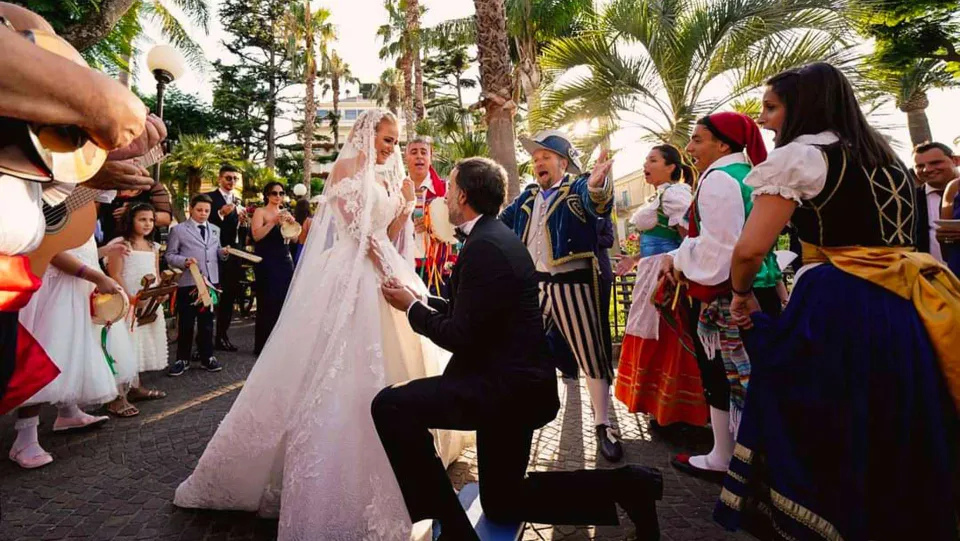
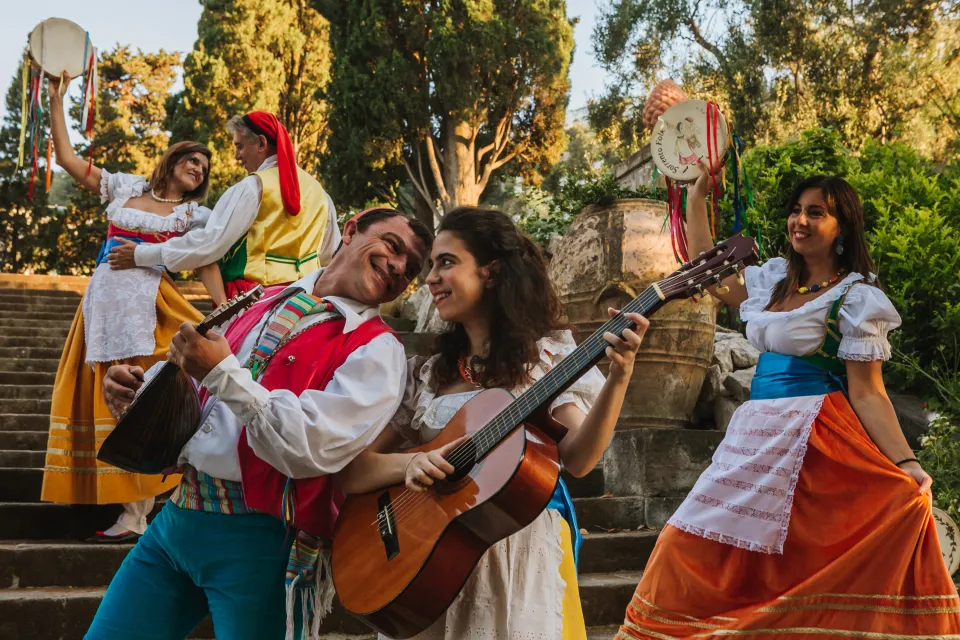
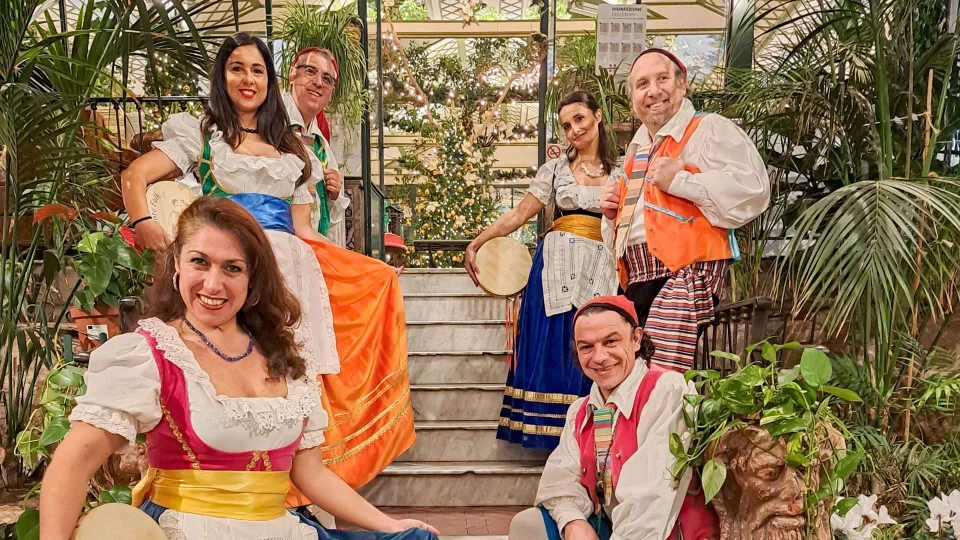
It also stands out for its costumes, hand-sewn by Sorrento seamstresses (for men a red wool cap, a waistcoat with gold buttons and fisherman's trousers; for women a pleated velvet skirt, a white lace apron and a multicoloured sash), and for the instruments of Campanian folk tradition: tamburello, nacchere, triccheballacche, putipù and scetavajasse. Characters such as the Pazzariello and Pulcinella often join the show. Maestro Tonino Ambrosino spent more than forty years teaching the original steps, and the dancers of Sorrento Folk come from this school.
The pizzica
The pizzica comes from the Salento, in Puglia, and is the dance most closely tied to the memory of tarantism. Its rhythm is fast and driving, often described as 6/8 or 12/8, and it is led by the tambourine. There are several kinds of pizzica in the Salento, from the courtship dance between a man and a woman to other local variants. In recent decades it has enjoyed a major revival, helped by folk music festivals.
The tammurriata
The tammurriata is found around Vesuvius and in other parts of Campania. It takes its name from the tammorra, the large frame drum with a goat or sheep skin and tin jingles, roughly 35 to 65 centimetres across. It is a dance linked to rural life and to festivals in honour of the Virgin Mary, with a steadier pace than the tarantella and a close bond with singing.
The differences at a glance
- Area: the Neapolitan and Sorrento tarantellas are from Campania, from the city of Naples and the Sorrento Peninsula; the pizzica is from the Salento; the tammurriata is from the Vesuvius area and wider Campania.
- Signature instrument: tambourine and castanets for the tarantellas; tambourine for the pizzica; tammorra for the tammurriata.
- Context: the Neapolitan and Sorrento tarantellas are dances of celebration and courtship; the pizzica keeps the memory of tarantism; the tammurriata is tied to religious festivals and farming life.
- Style: the tarantella sorrentina has set figures and costumes typical of the peninsula; the others generally leave more room for improvisation.
The best way to understand the differences, though, is to see them live. Sorrento Folk brings the tarantella sorrentina to hotels, restaurants, town squares and events: discover our tarantella show for events, or learn the basic steps with our tarantella experiences for adults and children.