
Tamburello, Nacchere, Triccheballacche: Tarantella Instruments and How to Play Them
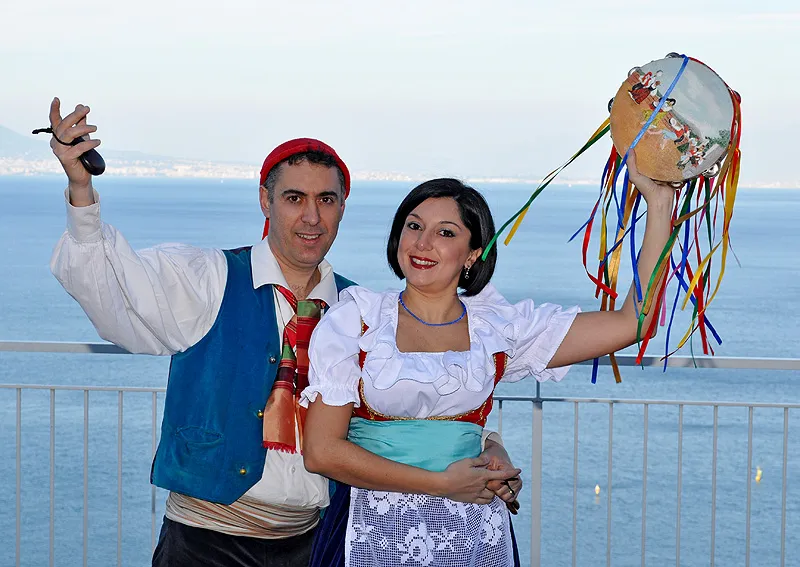
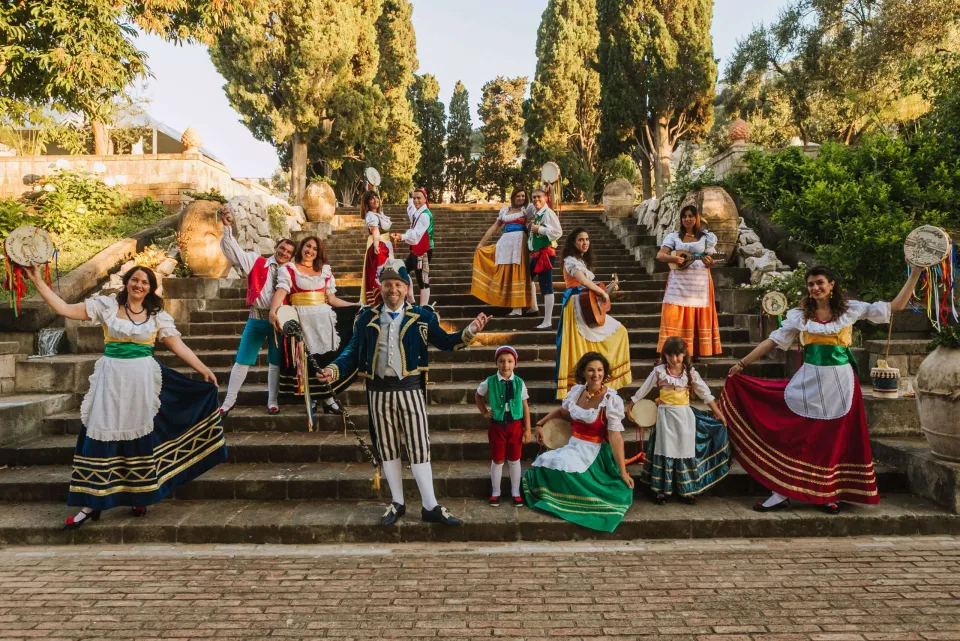
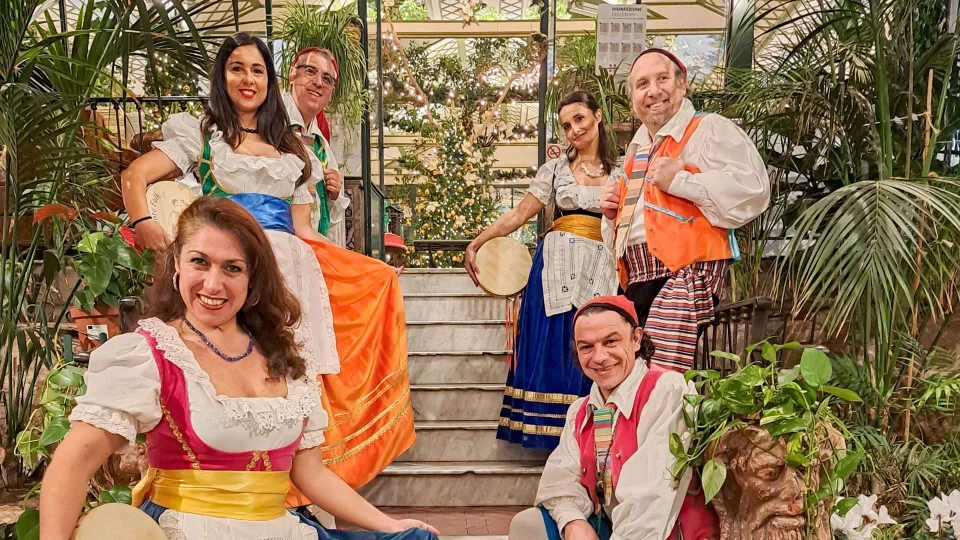
At every Sorrento Folk show there comes a moment when the instruments change hands: the dancers pass tambourines and castanets to the guests, and within seconds the whole room is keeping time. The instruments of the tarantella sorrentina, the traditional folk dance of Sorrento, are easy to pick up, but each one has its own way of being played. Here are the three you will see most often, how to hold them and how to get started, plus a few words on the other instruments of the festa.
Rhythm first. The tarantella is danced to a 6/8 rhythm. Without getting into music theory, that means each bar splits into two groups of three: you count ONE-two-three, TWO-two-three. The strong accents fall on "one" and "four", which is what gives the music its rocking, skipping feel.
A practical tip if you have never played anything: listen for a few seconds, find those two accents and play only them. Once you feel confident, add the beats in between. It is better to play a little and stay in time than to play a lot and drag behind. In a group, whoever holds the accents carries everyone else.
The tamburello
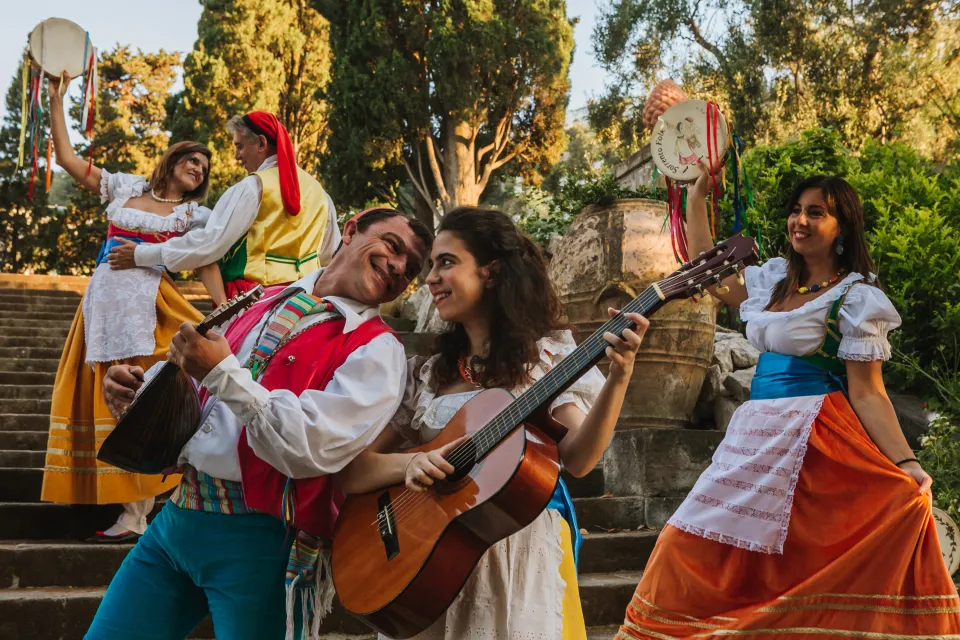
The tamburello, also called tammurriello, is a wooden frame with a skin stretched across one side and small metal jingles (cimbalini) set into slots in the frame. It is often painted and decorated with coloured ribbons.
How to hold it: grip the frame with your weaker hand, usually at a spot without jingles, with the skin facing outwards. Your other hand stays free to play.
How to play it, to begin with:
- strike the skin with your palm or your fingers held together, on the accents (one and four);
- shake the tambourine so the jingles ring, on the beats in between;
- to finish a phrase, give a firmer strike in the centre of the skin.
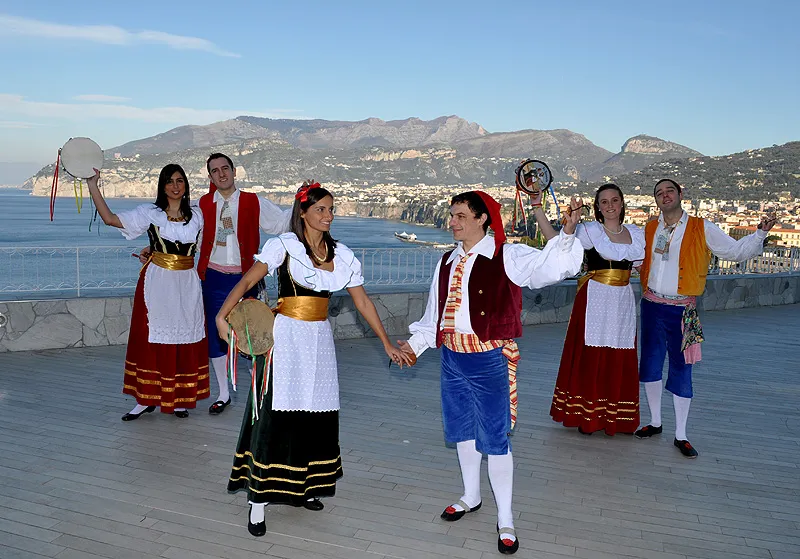
Lots of guests simply raise the tamburello above their heads and shake it in time. It is the easiest way to join in, and it looks great in photos.
The nacchere
The nacchere are castanets of Spanish origin, and in the tarantella sorrentina they are played by the men. They are two pieces of wood with holes, tied with a ribbon to the middle fingers so that they sit facing each other.
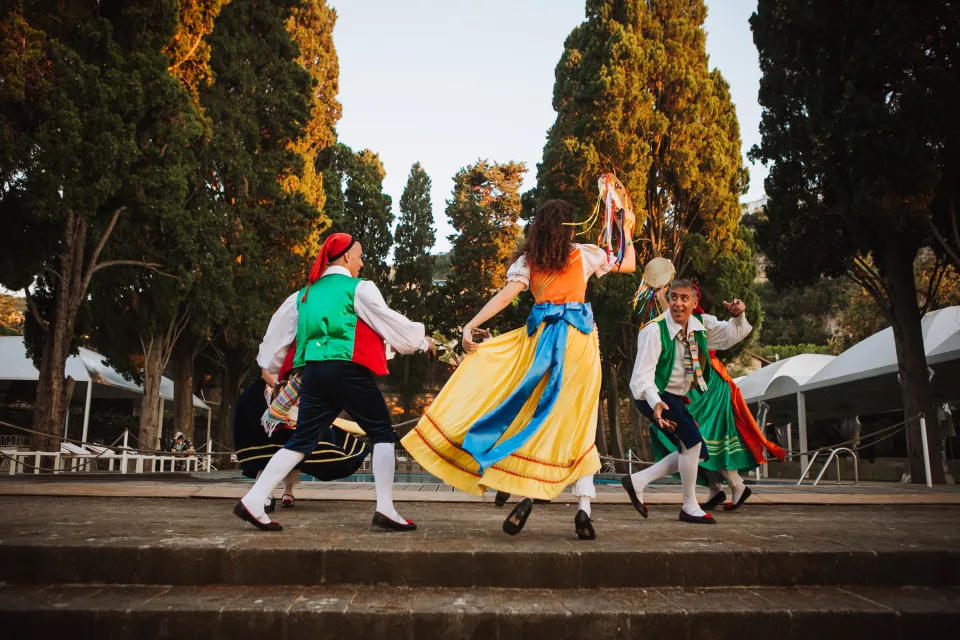
How to play them: keep your hand relaxed, close your fingers so the two pieces of wood click together, then open again straight away. The sound comes from a crisp click, not from force. To start, one click on each accent is plenty; once you get the hang of it, try faster clicks, alternating hands. The dancers often play them with their arms raised high while circling their partner.
The triccheballacche
The triccheballacche is the most curious-looking of the three: three small wooden hammers side by side, with tin discs fitted to the two outer bars. The middle bar is fixed and the outer two move. It is typical of the Piedigrotta festival in Naples.
How to play it: hold the instrument upright by its base and, with your other hand or a flick of the wrist, push the outer bars so they strike the central one. Each hit gives you the dry knock of wood and the jingle of tin at the same time. Again, start by marking the 6/8 accents and fill in later.
The other instruments of the festa
Alongside these three, the Campanian tradition has other instruments that sometimes appear in the show:
- the tammorra, a large frame drum (35 to 65 cm across) with a goat or sheep skin, built on a sieve frame and fitted with tin jingles called cicere;
- the putipù, a sound box covered with skin and a bamboo cane in the centre, rubbed with a damp hand;
- the scetavajasse, the "poor man's violin": a smooth stick and a notched stick fitted with tin discs;
- the mandolino (mandolin), which carries the melody.
Try them for real
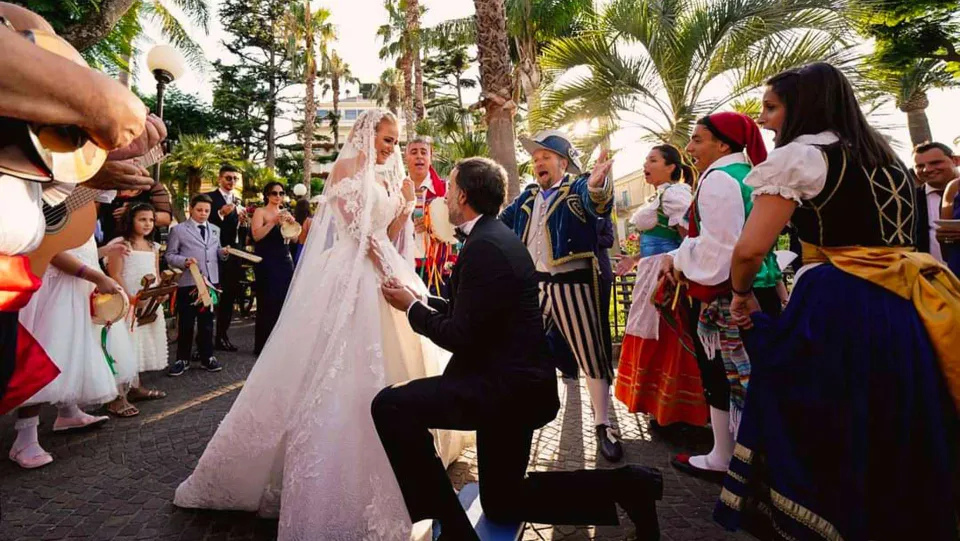
Instruments are much easier to learn with someone beside you showing the movement. During our tarantella experiences (basic step lessons for adults and children, a pizza school with a show, dinner shows for groups) the tambourines and castanets go round the room. And at a wedding with tarantella dancers, guests are drawn in and invited to play along with the dancers.
To learn more about each instrument, the instruments page has photos and descriptions, and the origins page tells the story of the dance. To check a date, write to Daniela through the quote request page.